The life of a scientist
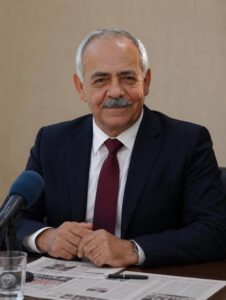
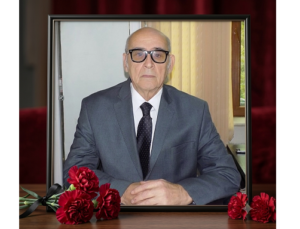
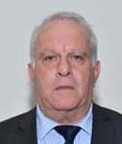
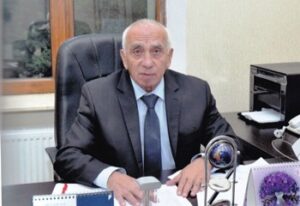
Babayev Yasin Nagi – Dr. Sc., Professor in Chemistry
I had a father …
My first teacher, even before I started school, was the source of my love for science and teaching. Thanks to him, I developed a deep affection for school, science, and the very idea of being a teacher. He did not just give me knowledge-he entrusted me with learning as a way of life and as a goal of existence. In his eyes, a teacher is a guide who shapes character, reading is a spiritual need, and a book is the most reliable source of knowledge. He taught us his infinite respect for books and science not just through words, but also by showing his care for a piece of paper thrown on the floor, a folded page of a book, and by demonstrating the subtleties of problem-solving.
My father did not only teach his children and students science; he filled every moment of our lives with deep, life-affirming messages. For him, life itself was a laboratory and every behavior an experiment. By quietly turning off a running tap, he instilled care for nature; by drawing attention to the beauty of a tree or a plant, he fostered an appreciation for the harmony of the universe. He showed us the sanctity of family, respect for the elderly, care for the young, and the place of mothers and fathers not with words, but through his personal example. Commitment to the homeland, national and spiritual values, constant reading, learning, and self-development were his vital principles, as valuable as breathing.
Now, as I leaf through the unfinished notebooks of that great scholar, the questions from the little girl inside me to her father grow more and more each day:
– Father, will you guide me to finish the unfinished article and continue the scientific path you started?
– Father, how can I complete the book we began writing together?
Life and Scientific Contributions
My father Babayev Yasin Naghi oglu, was born on June 20, 1948, in the city of Ordubad. He was the third of six children in his family. Having lost his father at an early age, he worked while continuing his education during his high school years, starting in 1962. He graduated from high school in 1965. He then attended the Faculty of Chemistry at Baku State University, graduating in 1971, and began his postgraduate studies. In 1978, he defended his dissertation in inorganic chemistry and was awarded the degree of Candidate of Chemical Sciences.From 1971 to 1976, he worked as a laboratory assistant, senior laboratory assistant, and engineer at the Institute of Catalysis and Inorganic Chemistry named after M.F. Naghiyev of the Academy of Sciences of Azerbaijan (KQÜKI), where he was also a part-time postgraduate student. During this period, he also served in the army.
Yasin Babayev has worked at Nakhchivan State University since 1976, holding positions as a teacher, senior teacher, and associate professor, and was awarded the academic title of professor in 2010. He served as the head of the university’s scientific research department from 1987 to 1989, and as the head of the chemistry department for two terms between 1990 and 1999. In 1998–1999, he was also responsible for the magistracy on a public basis.From 2000 to 2008, Yasin Babayev worked as the dean of the Faculty of Natural Sciences. Subsequently, he continued his career as a professor in the Chemistry Department and as the head of the “Regional Development Problems” scientific research laboratory.
In addition to teaching at the university, Yasin Babayev has been actively engaged in scientific research. He is the author of one invention, three patents, and approximately 200 scientific works, including two textbooks, two teaching aids for higher education institutions, several subject programs, and methodological articles. He has presented at numerous scientific conferences of both national and international significance, and his articles have been published in the local press, specialized journals, and in countries such as the Russian Federation, Ukraine, Georgia, and Turkey.
As a result of his scientific research, Y.N. Babayev defended his dissertation in inorganic chemistry at the Institute of Chemistry of the Academy of Sciences of the Republic of Azerbaijan in October 2005, earning the degree of Doctor of Sciences in Chemistry. He has always generously shared his knowledge and expertise in the training of scientific and pedagogical personnel. Two of his dissertation and doctoral students have successfully defended their dissertations and received the diploma of Doctor of Philosophy.
Y.N. Babayev’s main research areas include inorganic materials science, semiconductor chemistry, eutectic transformations, the study of the region’s natural resources, and their efficient utilization.
The Scientific Council of Nakhchivan State University awarded Y.N. Babayev the honorary title of “Scientist of the Year” in technical and natural sciences in 2006 for his outstanding scientific achievements. He represented the university at the XIII Congress of Teachers of the Republic of Azerbaijan in 2008. In recognition of his contributions to the development of education in Azerbaijan, he was also awarded the honorary title of Honored Teacher of the Republic of Azerbaijan in 2007.
My father always said that “the main key to the path to the goal is not only talent, but also will and perseverance.” In his view, “if talent is an ability given to us, willpower is the ability to polish that ability with patience and hard work, and not to be broken in the face of difficulties.”
“He instilled these high ideals in us not just through words, but by living them every day. His principled approach to teachers, students, books, and both the animate and inanimate world left a profound impact on our lives.
“You have disrespected the book…”
I was in elementary school when my father bought me a book as a gift. He had read it himself first and spoke highly of it to me. “Can I read it too?” I asked. He replied, “You should definitely read it-it’s very interesting.” Indeed, this book about the Golden Skinners was the first novel I ever read, and it captivated me.One evening, I was searching for the book I had been reading, but I couldn’t find it anywhere. I asked everyone at home, but no one knew where it was. Finally, I turned to my father: “Dad, I’m at the most interesting part of the book, but I can’t find it.”
My father replied calmly, “I have take the book and I won’t give it to you.”
I asked in surprise, “Why? I haven’t finished the book yet!”
He answered in a serious tone, “You have disrespected the book, so I can’t give it to you.”
“But Dad, it’s just an inanimate object—how can I respect it?” I protested.
My father continued: “I found the book on the ground. You read it, folded the pages, and left it there. One should never fold the pages of a book or throw it on the ground. This is disrespectful to a book.”
He then added, “If a book gives you knowledge and takes you further than where you are, it is your moral duty to respect it.” Then he took an A4 sheet of paper from the table, folded it neatly, cut the edge at an angle, and placed it in the middle of the book. Handing it to me, he said, “Here, go and continue now.” I kissed him on the cheek, took my book, and walked away.
Later, I realized that my father behaved this way intentionally to instill in us a love of reading. He would buy a book, read it himself, and describe its content with such enthusiasm that we couldn’t help but say, “How interesting! Give it to us, let’s read it too.”
He always said, “If you want your children to behave the way you want them to, you must first demonstrate that behavior yourself. You have no right to demand from anyone a behavior you have not shown yourself.”
I wouldn’t even give it a “3”…
We had just started studying chemistry, and I didn’t like the subject at all. As a result, my quarterly grade was “4”. When my father came home and looked at my quarterly grades, he asked: “Daughter, why did you get a “4” in chemistry?” I said: “Zanubar gave me a bad grade and I can’t take my eyes off him.” My father’s first question was:”Are you tired of saying a teacher?”My father had a special look from under his glasses, when you see that look, you want the ground to split open, to sink into the ground. At that moment, my tongue started to sag. My father said: “Bring me your notebook, let me look at it.” I brought it. He criticized the untidiness in the notebook, especially the drafts on the back pages: “Your notebook is a mirror of your brain, it should be neat!”
I fell silent; my voice wouldn’t come out, because I knew the conversation wasn’t over and there was more to come. My father began asking me questions, but my answers were either missing or incorrect. In the end, he said calmly, “You are right, teacher Zanubar made a big mistake by giving you a ‘4.’ If I had a student like you, I wouldn’t have given you even a ‘3.’ Then he patiently explained several topics to me himself. I began to understand the subject and to love my father’s “world of chemistry.” I grew to love it so much that I continue my work in the field of chemistry to this day.
“Aren’t you ever ashamed?”
I graduated from university with honors and began working as a chemistry teacher at Islam Safarli Secondary School No. 1 in the Nakhchivan Autonomous Republic. I loved the school, my work, and my students, and as my father always emphasized,I approached my lessons with great responsibility.
One day, a student named Sahila asked a question. Even though I explained in detail, my answer did not satisfy her, and she disagreed with my explanation. Although I was confident in my response, my lack of experience prevented me from convincing her. The doubt I saw in the eyes of my other students shook me deeply. I thought Sahila was being stubborn on purpose and wanted to humiliate me in front of the class. I was very embarrassed and felt the weight of being in an unfair situation, even though I believed I was right.
After class, I met with my father and told him about the incident my “magnificent” explanation, Sahila’s stubbornness, and how I planned to embarrass her in the next lesson and not give her a grade. My father listened attentively, without interrupting. I could see in his eyes that he was deeply analyzing the situation. Finally, he broke his silence with a single question:
— “Won’t you be ashamed at all?”
My real pedagogical journey began with this question. Even though 25 years have passed since then, in certain tense situations when my patience is exhausted and the monster inside me is about to emerge my father’s question and the expression on his face return to my mind.
My father was a living school; his gaze, his posture, his silence, his way of speaking, and the stories he told in the moment were our lessons. “Helping people is a human duty,” he always said.
But he is gone now, leaving behind a tearful family, thousands of students, and a great literary legacy…
Honesty, patriotism, being useful, justice, family values, and a commitment to constant learning and teaching—these were the basic principles of his philosophy of life. My dear FATHER, who dedicated his life to these highest values and set an example for us with his spirituality and humanity, you were my first teacher, scientific leader, advisor, mentor, and, most importantly, my guide on my life’s path.
After you left this mortal world on the very day you were born (20.06.1948 – 20.06.2025), in time, everyone found solace within their families,but my mother could not find that solace. She was shaken, left alone, without you…
May your soul be at peace! May your place be heaven, precious person!
I remembered those immortal verses of Imameddin Nasimi: “It is my body that is leaving, my soul is with you.” Yes, father, it was only your body that left this world, but your soul will live on forever in the memory of your family, your children, and the thousands of students who carry the light of your knowledge in their hearts.
Senior lecturer of Azerbaijan State Pedagogical University,
PhD in Chemistry, Nigar Yasin gizi Babayeva
04.08.2026